Does everyday family life often feel too loud, too fast, and overstimulating? Small, easy-to-practice moments of mindfulness can quickly bring calm back to parents and children.
This article presents short exercises, calming rituals, playful relaxation techniques, and simple ways to reliably integrate mindfulness into everyday life. Just a few minutes a day can smooth transitions, reduce stress signals, and shared rituals create a noticeable sense of calm.

Experience how short moments of mindfulness bring calm to the family.
A simple breathing exercise involves the child placing their hand or a soft toy on their stomach, observing the rise and fall of their breath as they inhale and exhale, while the parents speak calming phrases like, "Take a deep breath in, exhale slowly." For toddlers, short, playful instructions and a high-pitched, sing-song voice are sufficient; for school-aged children, longer counting aids and a deep, calm voice work better. Calm breathing lowers heart rate and muscle tension because slow exhalation activates the parasympathetic nervous system, which is reflected in a more relaxed facial expression and calmer breathing. Parents demonstrate the exercise, then let the child lead, observing how even just a few breaths noticeably contribute to a sense of calm.
A simplified body scan, presented as a travel game, guides the child through the head, shoulders, stomach, and legs with a story or an imaginary point of light. Parents gently tap areas, modeling the release, and then the child can lead the exercise themselves. In mindful listening, everyone closes their eyes, identifies three sounds, and names subtle differences. Questions like "What did you hear first?" encourage attention and shared wonder. Consistent transition cues, such as a sound, a candle, or a set greeting, simple validations like "I see you're tense. Would you like a short break or perhaps another exercise?", and demonstrating self-regulation through a deep voice and slow movements reduce resistance. Research shows that even short, regular exercises improve self-regulation, attention, and stress responses.
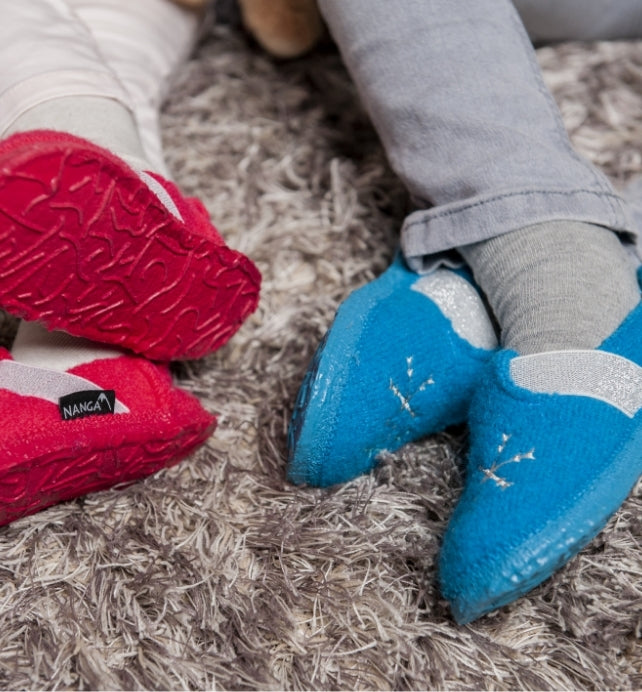
Non-slip, breathable children's socks for calming breathing games.

Establish calming rituals and a clear framework
Establish a short ritual routine with a clear signal, transition, calming activity, and concluding action. A concrete example would be: dim the lights, take three deep abdominal breaths together, read a short story or cuddle, before the child goes to their own bed. Demonstrate the breathing exercise: consciously inhale through the nose, hold briefly, exhale slowly through the mouth, and accompany the sequence in a calm voice so that the breathing of parent and child synchronizes. Such recurring routines clearly mark transitions, give the body a recognizable pattern, and make it easier to calm down in stressful moments.
Use recurring sensory cues such as dim lighting, a specific song, a calming scented sachet, and a special blanket, as these cues connect the brain and body with relaxation and make it easier to remember the ritual. Offer the child limited choices within the framework, such as which book or pillow, and act as a model: demonstrate your own calmness rather than just explaining it for the child to imitate. Create a visible routine aid with pictures or symbols and adapt rituals to the child's age, because consistency creates predictability, and predictability reduces stress responses in both children and parents.
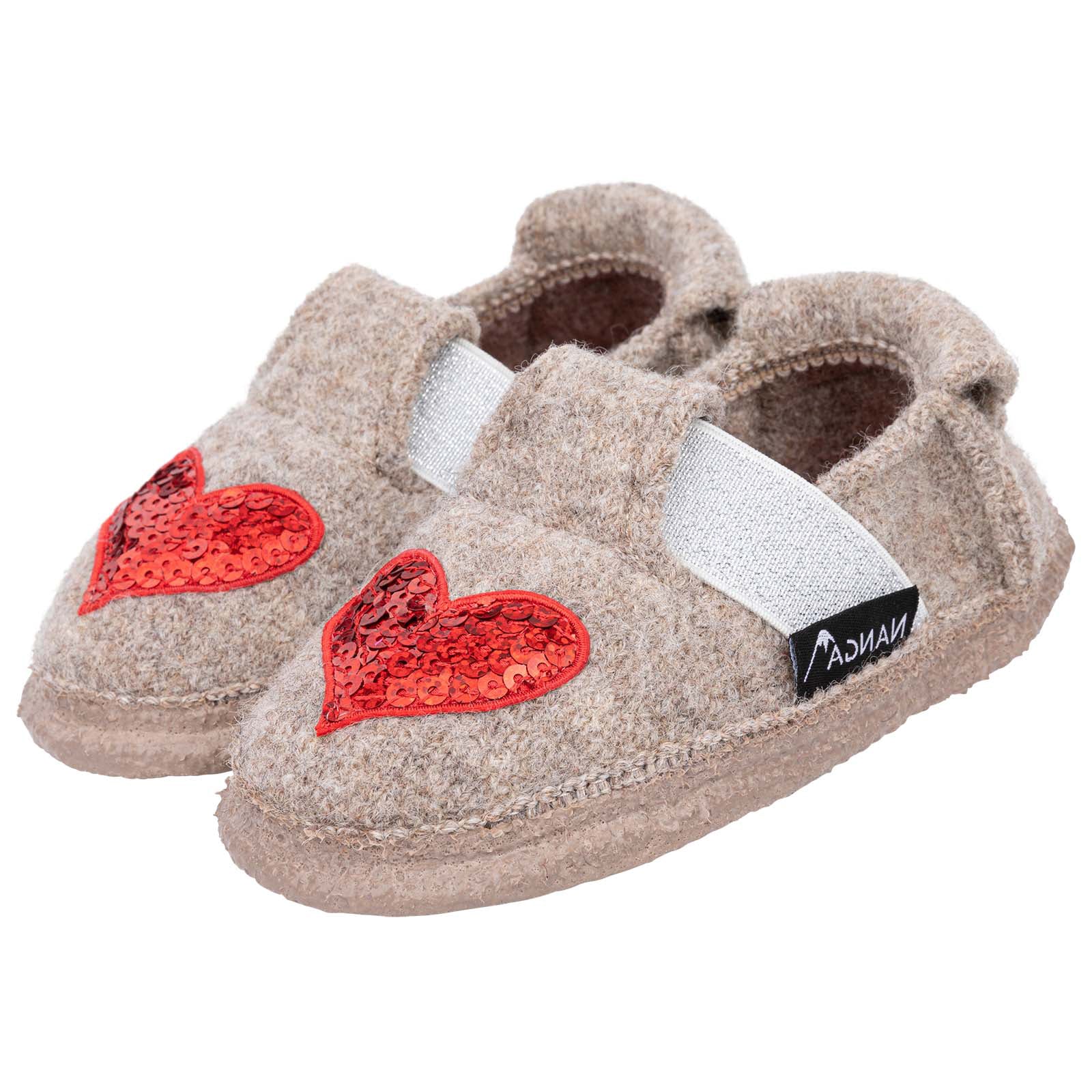
Non-slip, temperature-regulating wool shoes for a relaxed bedtime ritual

Learn short, easy-to-learn exercises for parents and children
Guided breathing exercises with specific phrases and simple imagery, such as imagining a balloon and placing a hand on the stomach, help parents and children to breathe more slowly and deeply together; for toddlers, visual imitations of breathing are a suitable alternative. A short version of the body scan, in which parents address different body parts in turn, allowing the child to feel where tension is located and guiding conscious release, promotes interoception and reduces muscle tension. Research shows that breath regulation dampens acute stress reactions and lowers heart rate, and that such short routines, which can be performed while sitting or lying down, quickly calm the child.
Sensory grounding games, such as "discover three things you see, two things you hear, and one thing that feels warm or cold," immediately shift attention; for toddlers, tactile boxes or scent boxes work particularly well. Movement-based mini-exercises like controlled shaking, slow stretching, simple balancing or animal movements release excess energy and help reduce arousal when parents model the movements. To integrate these exercises into daily life, parents link them to existing transitions, offer choices, and model calm rather than demanding it. Evidence-based sensitivity in adapting language and complexity strengthens co-regulation, and repeated, short rituals promote long-term emotional stability.
- Three short breathing scripts to try: Balloon breathing: "Place your hand on your stomach, inhale deeply, your stomach will expand like a balloon, then slowly exhale, the balloon will shrink"; 4-4-4 short version: "Count to four while inhaling, count to four while exhaling, repeat 3 times"; Visual breath imitation for toddlers: Parents audibly inhale and exhale, the child imitates, hand movement indicating the stomach. Vary the position while sitting or lying down, and model calmness rather than demanding it. Research shows that breath regulation dampens acute stress responses and lowers heart rate, which is why short, clear sentences are effective.
- A quick body scan in three to six steps: Name the head, shoulders, stomach, hands, legs, and feet in succession. Ask the child to feel where there is tension, and say, "Breathe into that area, and release as you exhale." Hold each part only briefly, using simple words and a hand on the corresponding area, so that parents can encourage interoception and reduce muscle tension.
- Sensory game 3-2-1 plus toddler variations: Give the instructions: "Find three things you see, two things you hear, one thing that feels cold or warm." For toddlers: tactile boxes with different fabrics, scent boxes, or guessing an object together. Sensory focus quickly shifts attention and reduces tension.
- Movement-based mini-exercises for releasing pent-up energy: Parents demonstrate and the child imitates, for example, controlled shaking of the arms, slow full-body stretches, simple animal movements, or short balance exercises on one leg. Limit repetitions, offer choices, and link the movement to a breath to wind down.
- Integration into daily life and rituals: Link an exercise to existing transitions such as waking up, before bedtime, returning home from daycare, or short learning breaks; use a short signal word or gesture as a cue, give the child small choices, and demonstrate the desired calmness yourself. Repeated, short rituals strengthen co-regulation and, in the long term, emotional stability.

Promote playful and creative relaxation
Short, playful breathing exercises, such as blowing an imaginary candle combined with varying exhalations, calm the nervous system and measurably reduce stress responses. Guided body scans, like a treasure hunt, focus attention on toes, hands, and other body parts, strengthen interoception, and promote self-regulation through small movements. Such exercises give parents simple tools to visibly reduce restlessness in children. Research shows that controlled breathing and targeted body awareness have rapid, noticeable effects on arousal levels and emotional security.
Sensory-based crafting with playdough, fabric scraps, or natural materials anchors attention in the here and now, because children consciously perceive texture, shape, or smell. Slow movement and balance games, such as a calm obstacle course or animal trails, regulate energy, improve concentration, and facilitate the transition to quieter phases. Incorporating quiet everyday sounds into a guided imagery exercise strengthens active listening, allows the child to participate, and guided visualizations have been proven to reduce anxiety and feelings of tension.
Safe, easy-to-put-on shoes for smooth, playful transitions.

Integrate mindfulness reliably into everyday life
Establish brief transition rituals with clear signals, such as closing a door, a hand signal, or a sound, and connect them with a short, shared action like three deep breaths. Such repeated signals create predictability, and predictability reduces stress responses in both parents and children. Tactile and visual anchors, such as a hand on the stomach, a small stone, or looking in a mirror, engage the body and help shift attention from the head to the body.
Integrate mindfulness into existing everyday moments, for example, while getting dressed, putting on shoes, or after arriving home, instead of creating new times for it. Adapt exercises to age and temperament: playfully with imitation for toddlers, with brief explanations and choices for school-aged children, and with quiet, private variations for teenagers. Measure progress using observable signals such as breathing, posture, and reaction time rather than minutes, and reward small changes with praise, additional choices, or a quiet ritual. Through continuous observation, you will recognize effective elements and can adjust exercises accordingly.
Short, easy-to-practice moments of mindfulness help families to reduce everyday noise and overstimulation and to smooth transitions. Studies and practical experience show that a few minutes of breathing exercises, a simplified body scan, or sensory games can lower heart rate, strengthen self-regulation, and improve attention.
To achieve this, establish clear signals, recurring rituals, and age-appropriate, playful exercises so that the practice is reliable and predictability reduces stress. Start with a short daily activity, observe breathing, posture, and reaction time, and adapt the exercises to noticeably anchor more calmness in your family's everyday life.
Free Shipping
Free returns
All
Sneakers
Barefoot shoes
Socks
sole
accessories
Adventurers Club
Dealer portal
🎁 Outlet