
Do you want to keep children entertained outdoors, but don't know which outdoor games are suitable for which age group? Finding the right balance between safe preparation and age-appropriate fun is a daily challenge for many caregivers.
This article shows you how to plan child-friendly outings, keep toddlers and young children meaningfully occupied, encourage preschool and primary school children through movement, and awaken their curiosity with discovery and learning games. You'll also learn how to easily adapt games to the city, park, or forest, and how simple craft ideas enhance the learning value, so you have immediately implementable suggestions for every age group.

Prepare excursions safely and in a child-friendly manner.
Pack layerable clothing, sturdy footwear, rain and sun protection, spare clothes, water bottles, trash bags, and a compact first-aid kit, and check that everything is in working order and complete before each outing. Choose routes according to the children's walking ability and attention span, scout the route beforehand, and mark turnaround or meeting points to avoid preventable risks such as unstable ground or steep slopes. Assign roles, such as leader, tail, and observer, and agree on visible meeting points and a simple signal for regrouping breaks to ensure clear and consistent group organization. Implement a buddy system and adjust the level of supervision to the children's age to maintain safety and oversight.
Prepare age-appropriate versions of games, formulate brief safety rules before starting, such as keeping a distance from water, not touching unknown plants, and not climbing on brittle branches, and offer simple modifications so that everyone can participate. Collect allergy and medication information, provide the contact details of an external contact person, and know the quickest route to local help so that you can act quickly in an emergency. Practice basic first aid measures with the team and explain simple rules for protecting nature, for example, not collecting rare plants and taking trash with you.
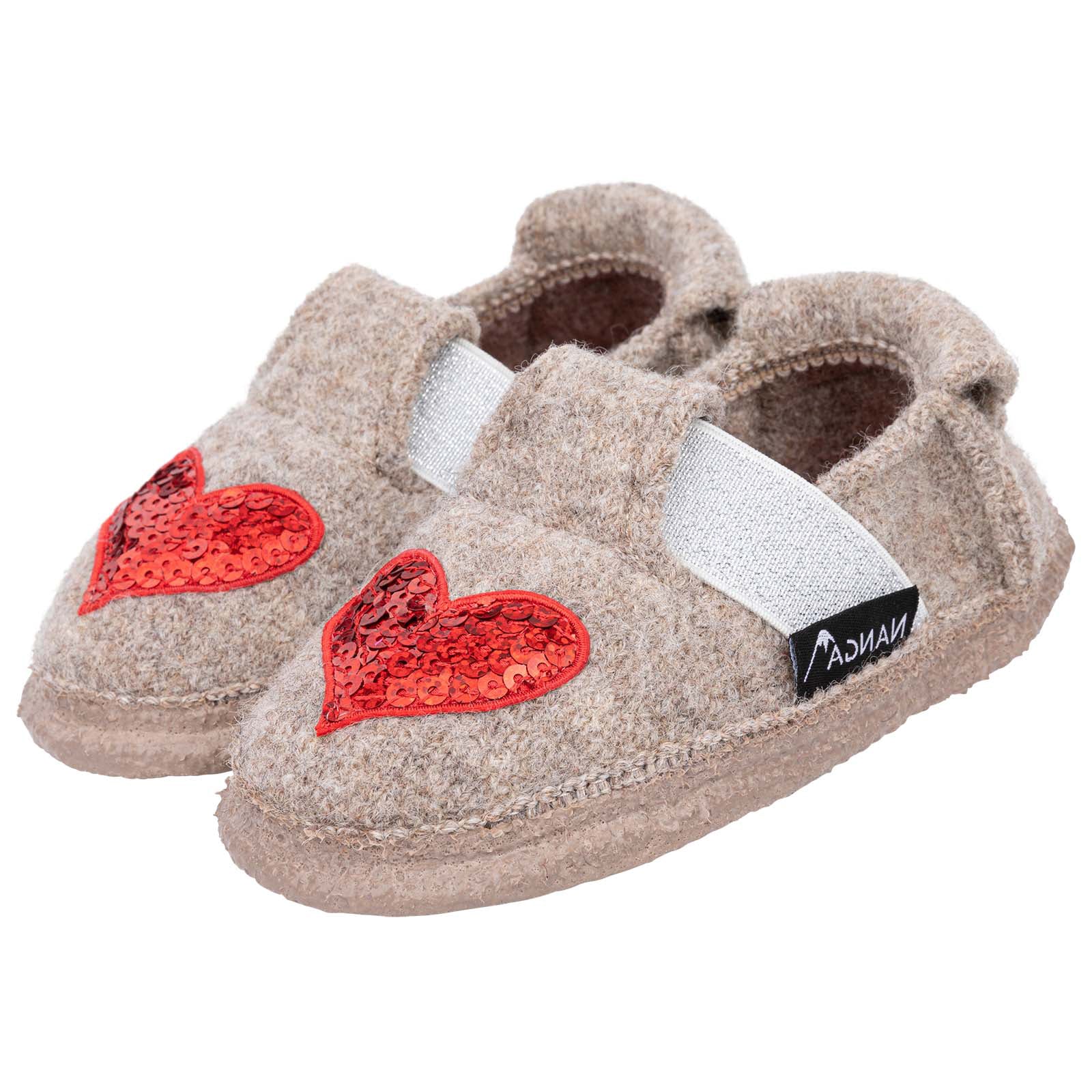
Choose non-slip wool shoes that offer a barefoot feel and secure support.

Create playful activities for crawling and toddler babies.
Place different fabrics and safe everyday objects, such as wooden spoons, soft cloths, and BPA-free cup rings, on a playmat. Rotate the materials regularly and observe which surfaces the child prefers to encourage tactile preferences and grasping strength. Create a safe crawling course using cushions, low padding, and sturdy cardboard on a non-slip surface with soft landing areas. Design clear starting and ending points and vary the height and distance slightly to practice balance and gross motor skills. Use simple rhythms with clapping, humming, and everyday objects as percussion instruments. Encourage the child to imitate, rock, and sway, and vary the volume and tempo to develop auditory discrimination, speech rhythm, and body awareness. Ensure safety and observability so you can document developmental progress and adjust activities accordingly.
Quick sensory stations with clean, washed leaves, pine cones, smooth stones, and soft grasses on a shallow tray allow for supervised, free tactile exploration. Name each item aloud, avoid small or sharp pieces, and use play to support vocabulary, concentration, and fine motor exploration. Ritualized mini-activities, such as a welcome song, two movement exercises, and a sensory discovery, create reliability, while changing only one variable per week to maintain curiosity. This combines sensory variety with recurring structure, fostering security, attention, and adaptability in crawlers and toddlers.
Non-slip, lightweight socks made from organic cotton for safe crawling

Challenge preschool and primary school children with active games
Simple activity games like nature relays, leaf bingo, sensory trails, and treasure hunts are ideal for preschool and primary school children, as they can be easily adapted to different skill levels and available space. For preschoolers, distances can be reduced, items limited, or visual cues provided; for primary school children, timing, scoring systems, or combined puzzles can be added. Success can be tracked through times, scores, photos of found items, or complete task lists, and teachers can document progress with brief observation notes, photos, or simple checklists.
Suitable materials include sticks, stones, leaves, and pine cones; choose smooth, dry specimens, remove any sharp edges, and store collected items separately to ensure hygiene. Practical safety precautions include wearing closed shoes, checking for wet surfaces or insects, carrying a small first-aid kit, and washing hands after playing. Games can be scaled for narrow paths or open spaces by shortening distances, increasing the size of the targets, adding tactile aids, or incorporating cooperative rules. They can also be linked to science or language development, and children become planners when they design treasure maps or choose their own teams and tasks.
- Variations and difficulty levels: Adapt each game to age and abilities by changing route lengths, the number of items to be found, or clues; for preschool children, reduce distances, limit the number of items to be found, and work with picture cards or colored markers; for primary school children, add time limits, point systems, combined puzzle tasks, or longer stages, and offer differentiation for strong and weaker children within a group.
- Safety, hygiene and material checklist: Check sturdy, closed footwear, check the ground surface and insect risk, choose smooth, dry materials and remove sharp edges, store collected finds separately in a box, provide a small first-aid kit, clarify allergies and emergency contacts, and ensure regular hand washing or disinfection after playing.
- Documentation, observation and learning integration: Document successes visibly with photos, photographed finds, time or point lists, or complete task strips; record short observation notes on motor skills, language and social behavior, use simple checklists or three-level grids for learning assessment, and link the games with science, language development or mathematics by having children, for example, design treasure maps, write descriptions, or add up points.

Awaken senses and curiosity with discovery and learning games
Set up several simple sensory stations, such as tactile boxes with leaves, bark, and stones, scent jars with herbs, and sound boxes with seeds or gravel, and adapt the materials and tasks to the children's age. For toddlers, offer individual objects to touch and name; for older children, let them sort, compare, and describe properties like roughness or weight to strengthen their observation skills and vocabulary. Such stations form the basis for further experiments and detective games because they connect sensory perception with linguistic reflection.
Create scavenger hunts with age-appropriate checklists, symbols, or collection tasks, ranging from simple color descriptions to questions like "Why is this leaf yellow?", to encourage deduction. Supplement with small experiments, such as whether leaves float, how soil retains water, or how flower pigments are distributed, giving younger children clear steps while older children formulate hypotheses and document results. Also, conduct silent observation walks or blindfolded smelling tests, ensuring safety rules like "no tasting" and close supervision, and increase the difficulty with longer listening intervals or location maps. Have children draw their finds, keep simple tables, or prepare short presentations, with picture cards helping younger children and labeling, measuring, and hypotheses challenging older children.
Give children a barefoot feeling, non-slip, made from 100% organic cotton.
Adapt games to the city, park and forest and create simple craft ideas.
The games can be adapted to different age groups: simple treasure hunts with picture cards are suitable for 2- to 4-year-olds to promote fine motor skills and orientation; relay races and location maps encourage cooperation and map reading for 5- to 7-year-olds; and from around 8 years old, puzzles and building tasks challenge problem-solving skills and planning. Depending on the location, you can adapt the rules and materials, for example, safe playing areas and chalk markings on hard surfaces, observation bingo in the city, and tracking or hiding places in the forest using weatherproof materials. Gradually increase the difficulty by using larger search areas, more complex clues, or team tasks to strengthen orientation skills, perseverance, and problem-solving abilities without overwhelming the children.
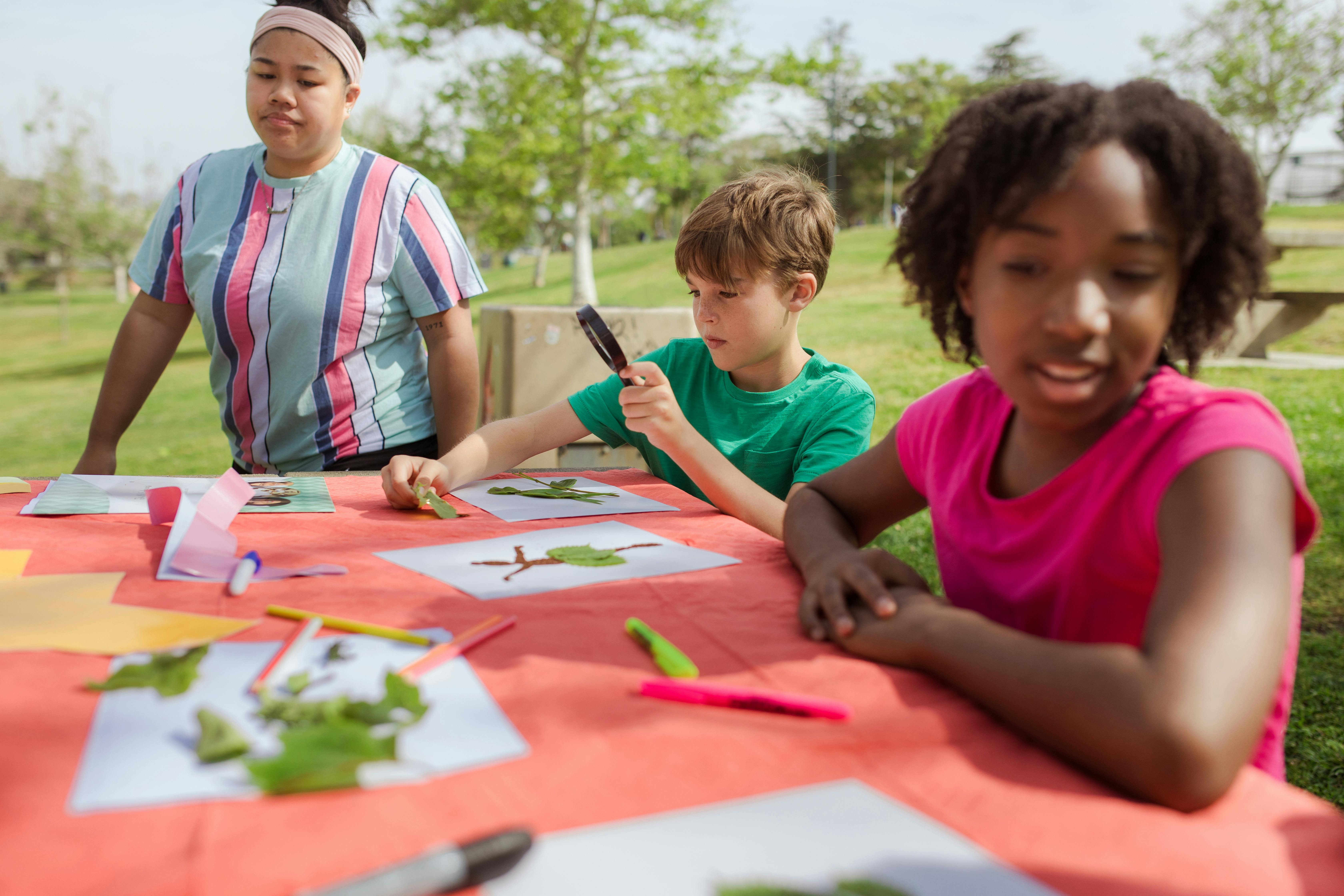
Simple craft ideas using found objects work in clear steps: nature mobiles made from twigs and leaves, stone puzzles with painted motif pieces, leaf prints, and makeshift shelters from reusable materials can be easily varied. Offer alternative materials for those with allergies or missing tools, pay attention to durability and portability, and suggest safe substitutes as well as simple work steps. In mixed groups, assign collecting and support tasks to the younger participants, leadership and problem-solving tasks to the older ones, and use point systems, construction projects, or leader and scout roles with clear responsibilities to ensure everyone participates. Establish concrete safety rules such as keeping a distance from roads, wearing appropriate clothing in wet conditions, and basic first aid for insect bites, and consistently practice leave-no-trace and handle protected plants and animals with care.
Nature-based games promote movement, perception, and social skills when they are age-appropriate, safely organized, and adapted to the location and group. Concrete measures such as easily scalable routes, sensory stations, clear safety rules, and simple craft ideas allow for immediate implementation and documentation of learning progress.
Use the headings Preparation, Crawling and Toddler Activities, Active Games, Discovery and Craft Ideas to quickly find suitable activities. Try small variations, document your observations, and adapt rules as needed so that children can learn safely, explore their curiosity, and caregivers can develop practical routines.